A Local's Guide: Seoul Traditional Hanbok Rental & Palace Photoshoot Guide (2026): Top Rental Shops, Free Palace Entry & Secret Photo Spots
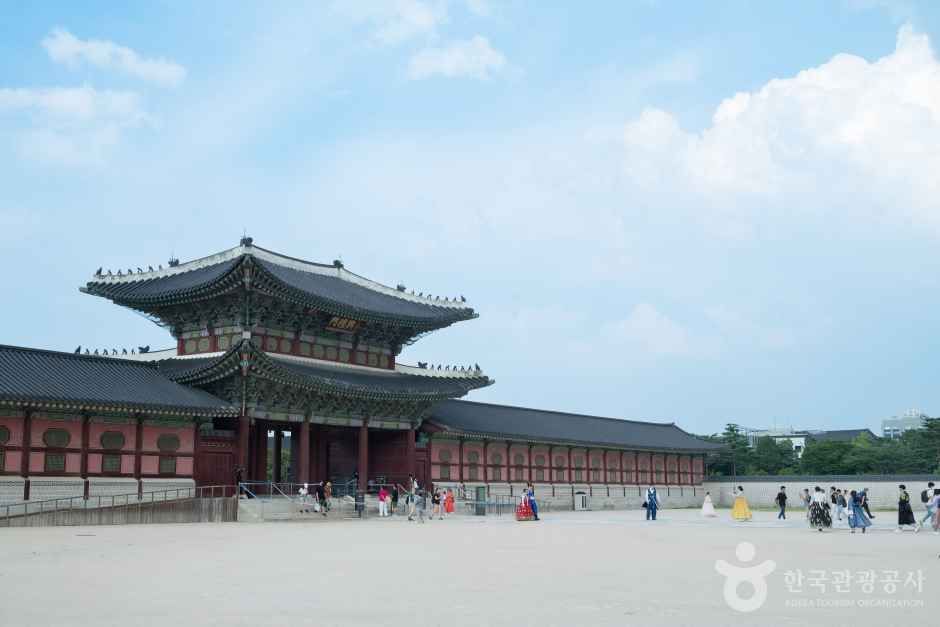
Walking through the grand gates of Gyeongbokgung Palace in a flowing Hanbok is one of the most memorable cultural experiences you can have in Seoul. The vibrant colors of silk skirts against the centuries-old painted wooden eaves of Joseon dynasty architecture create an atmosphere that instantly transports you back in time.
As someone who has lived in Seoul for years and regularly shows visiting friends around our historic heartland, I have seen far too many travelers pay unnecessary admission fees, struggle with ill-fitting garments, or miss out on the quietest, most majestic photography angles.
Renting a Hanbok is not just a fun photoshoot opportunity—it is a respected local tradition that grants you free entry into Seoul's grand royal palaces. In this comprehensive guide, I will share everything you need to know for 2026: official free admission rules, exact rental costs, fitting secrets that transform your look, and six hidden photoshoot spots where you can escape the crowds and capture breathtaking photos.
Step 1: How Free Royal Palace Admission Works for Hanbok Wearers
One of Seoul's most generous cultural initiatives is the free entry policy for visitors wearing Hanbok. Established by the Cultural Heritage Administration, this policy encourages both locals and international travelers to keep Korean heritage alive while exploring historic landmarks.
Official Dress Code Guidelines & Free Ticket Gates
To qualify for free admission at Gyeongbokgung, Changdeokgung, Deoksugung, and Changgyeonggung, you must wear a complete, proper Hanbok set. While palace staff are welcoming, they do enforce simple dress standards at the gates.
Local Tip: While Hanbok grants free entry to the main palace grounds, specialized ticketed exhibits—such as the Changdeokgung Secret Garden (Huwon) tour—still require advance reservations and separate paid tickets.
Palace Closing Days & Operating Hours at a Glance
Nothing spoils a planned photoshoot faster than arriving at a locked gate. Each royal palace operates on a strict weekly maintenance schedule, with alternate closing days between Gyeongbokgung and neighboring sites.
Standard palace admission without Hanbok ranges between ₩1,000 and ₩3,000 per adult.
Step 2: Choosing Your Rental Shop & Understanding 2026 Pricing
Dozens of Hanbok rental studios cluster around Gyeongbokgung Station (Subway Line 3, Exits 3 & 4) and Anguk Station (Subway Line 3, Exits 1 & 2) near Bukchon Hanok Village. Reserve your spot early or compare options to secure your preferred dress style.
You can conveniently check availability and reserve your Gyeongbokgung Hanbok Rental Experience on Klook in advance to skip long walk-in registration queues.
Traditional vs. Royal Premium Hanbok: What's the Difference?
When you walk into a rental shop, you will generally be offered two main categories of garments:
- Traditional Basic Hanbok: Crafted from lightweight silk or synthetic fabrics with classic solid colors, minimal embroidery, and historical accuracy. Skirts hang in natural, understated folds. This style appeals to lovers of minimalist, authentic Korean aesthetic.
- Theme / Premium Royal Hanbok: Features vibrant pastel hues, rich gold leaf stamping (Geumbox), multi-layered organza skirts, and elaborate dragon or phoenix embroidery across the chest and shoulders. These dresses yield stunning, high-contrast photos that pop against gray palace stone walls.
Rental Rates, Add-On Costs, and Deposit Rules Comparison
Rental prices in Seoul are standardized across top studios near the palaces. Below is a breakdown of average rates and hidden add-on costs to factor into your budget.
Local Security Deposit Rule: Most rental shops require one physical passport or national ID card per group to be left as collateral during your rental period, along with a small refundable cash deposit (₩10,000 to ₩50,000). Keep your passport accessible in your day bag when arriving at the shop.
(Photo: Source - Korea Tourism Organization, KOGL Type 1)
Step 3: Essential Fitting Hacks: Underskirts, Shoes & Hair Styling
The difference between looking like a royal court member and looking like you are wearing a costume comes down to small fitting details. Here are my essential local hacks.
Why the Can-Can Petticoat is Non-Negotiable
If there is one optional add-on you must pay for, it is the wire hoop petticoat—locally referred to as the Can-Can Underskirt (Sock-chima).
Traditional Korean skirts are designed to billow outwards gracefully, creating an elegant bell-shaped silhouette. Without a stiffened underskirt, a rental skirt will collapse flat against your legs, dragging on the dusty ground and stepping on your hem as you walk. Spending an extra ₩3,000 to ₩5,000 for a petticoat elevates your entire look and keeps your skirt clean as you glide across palace courtyards.
Traditional Hair Braiding (Daenggi) & Footwear Tips
Step 4: Top 6 Secret Photoshoot Spots in Seoul's Royal Palaces
While ninety percent of tourists crowd around the central throne hall courtyard, experienced photographers slip away into lesser-known palace alcoves for serene photos. Here are six prime photography locations.
(Photo: Source - Korea Tourism Organization, KOGL Type 1)
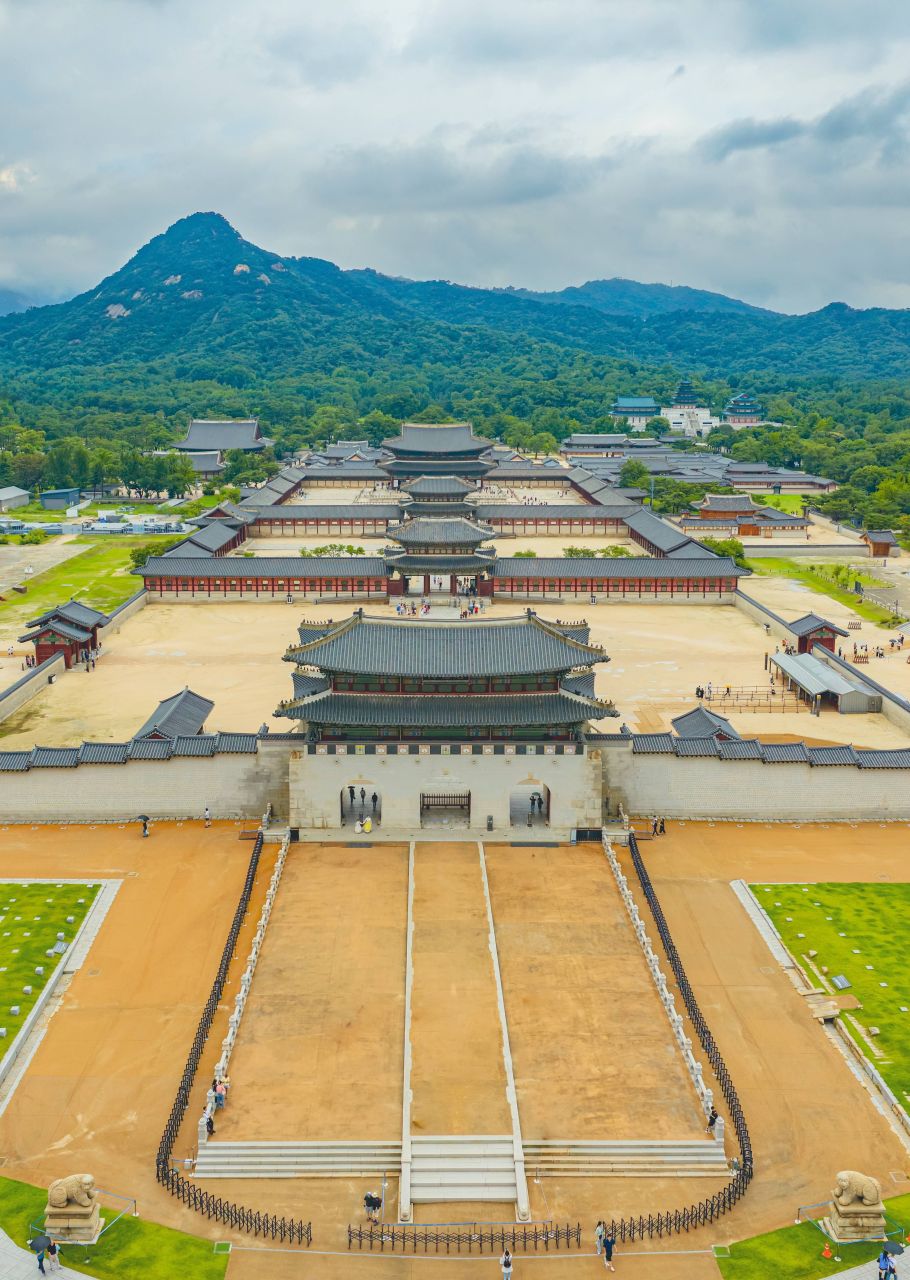
1. Gyeongbokgung: The Pillars of Geunjeongjeon Cloister (회랑)
Instead of taking photos directly in front of the main throne hall where hundreds of tourists walk past, step into the covered wooden walkways (Hoerang) surrounding the main courtyard. The endless repeating rows of vermilion columns create incredible depth-of-field perspective lines. Position yourself between two pillars near golden hour to catch soft sunlight filtering through the timber frames.
2. Gyeongbokgung: Gyeonghoeru Pavilion & Pond Reflection (경회루)
Located on the western side of the palace, Gyeonghoeru is a magnificent two-story wooden pavilion resting on 48 massive granite pillars inside a quiet lotus pond. Stand on the eastern bank of the pond, framing your portrait so that both the wooden architecture and its mirror reflection in the water appear behind you.

(Photo: Source - Korea Tourism Organization, KOGL Type 1)
3. Gyeongbokgung: Hyangwonjeong Pavilion Wooden Bridge (향원정)
Tucked away at the northernmost end of Gyeongbokgung lies Hyangwonjeong, a hexagonal two-story pavilion built on an islet in the middle of a lily pond. A newly restored wooden bridge (Chwihyanggyo) connects the island to the main grounds. Capture a portrait looking down the length of the wooden bridge toward the colorful pavilion and the peaks of Mt. Bugaksan rising in the background.
4. Changdeokgung: Injeongjeon Courtyard Stone Stairs
If Gyeongbokgung feels too crowded, walk fifteen minutes east to Changdeokgung Palace. The stone courtyard facing Injeongjeon Hall features wide granite terraces with far fewer visitors. The intricate blue-glazed roof tiles of Injeongjeon provide a rich backdrop for full-length Hanbok portraits.

(Photo: Source - Korea Tourism Organization, KOGL Type 1)
5. Bukchon Hanok Village: Alley 31 Vista Point (북촌로11길)
After visiting the palaces, stroll up into Bukchon Hanok Village. Head to the top of Alley 31 (Bukchon-ro 11-gil). Standing at the upper crest of the stone street, you can frame yourself between traditional wooden tiled gates (Giwa), looking down the alley toward the modern skyscrapers of downtown Seoul and N Seoul Tower in the far distance.
Local Etiquette Note: Bukchon Hanok Village is a real residential neighborhood. Maintain quiet tones, avoid knocking on wooden doors, and adhere strictly to the municipal quiet hours (09:00 to 17:00).
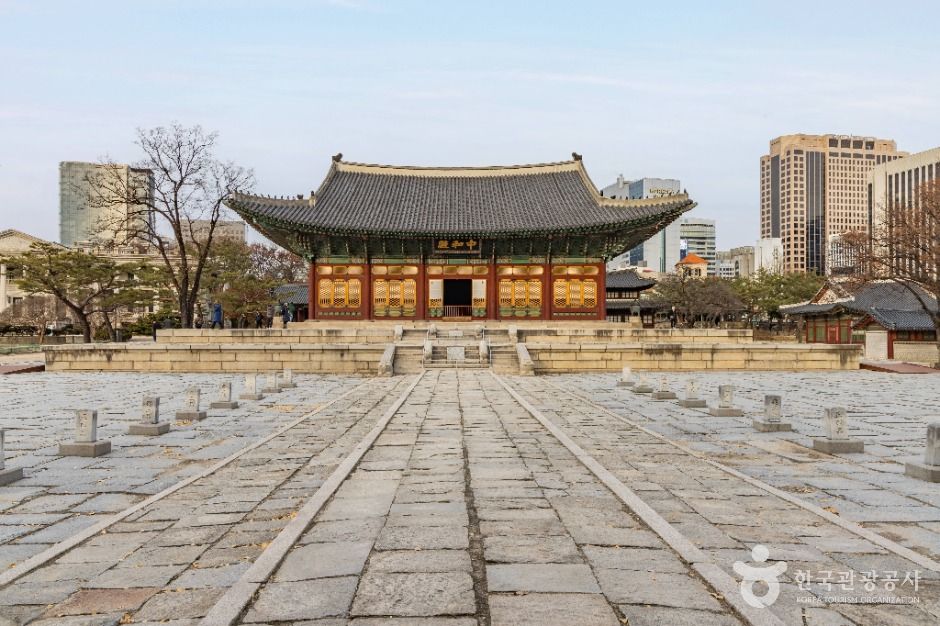
6. Deoksugung: Stonewall Road & Neoclassical Hall (덕수궁 돌담길)
Deoksugung is unique among Seoul's royal palaces because it features both traditional Joseon wooden architecture and Western neoclassical stone edifices like Seokjojeon. Capture a dramatic hybrid portrait near Seokjojeon's ionic columns, then exit through the main gate to stroll along the famous Deoksugung Stonewall Road (Doldam-gil) under a canopy of gingko trees.
(Photo: Source - Korea Tourism Organization, KOGL Type 1)
Step 5: Step-by-Step 1-Day Hanbok Experience Itinerary
To maximize your rental time and capture optimal lighting, follow this field-tested one-day itinerary.
Frequently Asked Questions (FAQ)
Q1: Can men and children rent Hanbok in Seoul?
Yes! Rental studios stock a complete selection of men's warrior coats (Dae-gunchang), scholar robes (Boryeong), and royal king garments (Gonryongpo), as well as adorable children's sets starting from ages 2 and up. Q2: What happens if it rains while I am wearing a Hanbok?
Minor drizzle is manageable with large clear umbrellas, which create romantic photoshoot props. However, in heavy rain, rental shops may restrict long skirts outdoors to prevent fabric damage. Check the daily weather forecast before booking. Q3: Are there locker facilities at the rental shops?
Almost every studio provides free personal lockers for your backpack, shoes, and street clothes. You will be given a small embroidered traditional handbag to carry your phone, wallet, and lipstick.
Affiliate Disclosure: This guide contains trusted partner affiliate links. If you book through our links, Seoulite Post may earn a small commission at no extra cost to you.


