Seoul Night Market & Pocha Guide (2026): Gwangjang, Euljiro Outdoor Tables, Banpo & Local Nightlife Hacks
As a local living in Seoul for over a decade, I am often asked where to experience the authentic heart of Korean nightlife once the sun sets. While the high-tech neon glow of Gangnam and the energetic dance clubs of Hongdae grab global headlines, nothing captures the true soul of Seoul at night quite like its night markets and street pocha (포장마차) alleys.
Whether you are craving sizzling mung bean pancakes fried to order, fresh beef yukhoe, cold draft beer paired with dried pollack on retro plastic tables, or international food truck treats under the stars along the Hangang River, Seoul offers an unparalleled late-night culinary culture.
Navigating foreign payment rules, language barriers, and crowded seating can feel intimidating for first-time international visitors. In this comprehensive 2026 local guide, I break down Seoul’s top night market spots, signature street food dishes, cash versus Wowpass card rules, subway exit logistics, and essential etiquette tips. To make the most of your evening culinary adventure, you can also join a guided Seoul Night Food Tour to discover hidden alleys with an English-speaking expert.
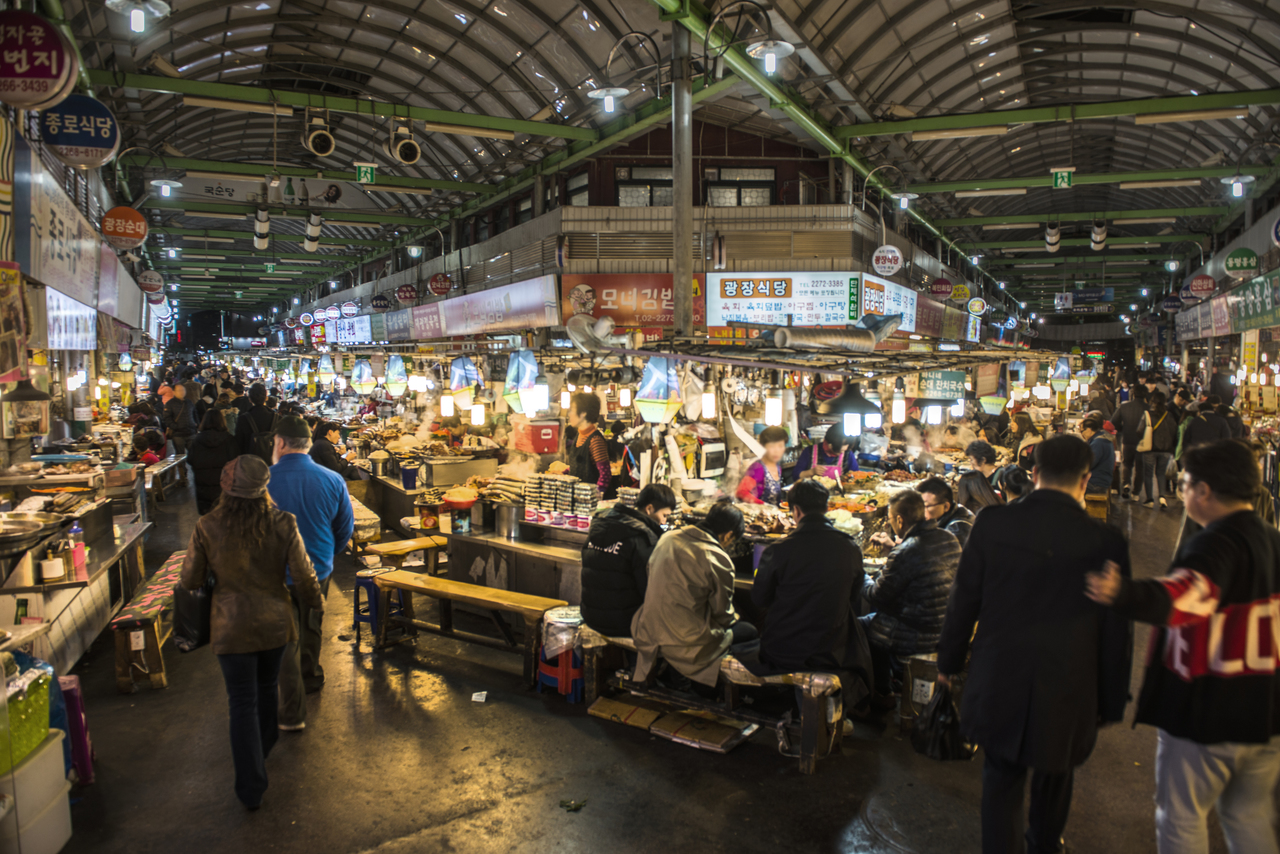
(Photo: Source - Korea Tourism Organization, KOGL Type 1)
1. Gwangjang Market (광장시장): The Crown Jewel of Traditional Street Food
If you only have time for one traditional food market during your stay in Seoul, make it Gwangjang Market. Established in 1905 as Korea’s first permanent daily market, Gwangjang transforms every evening into a roaring, sensory-rich food haven illuminated by golden hanging lamps.
Must-Try Dishes at Gwangjang Market
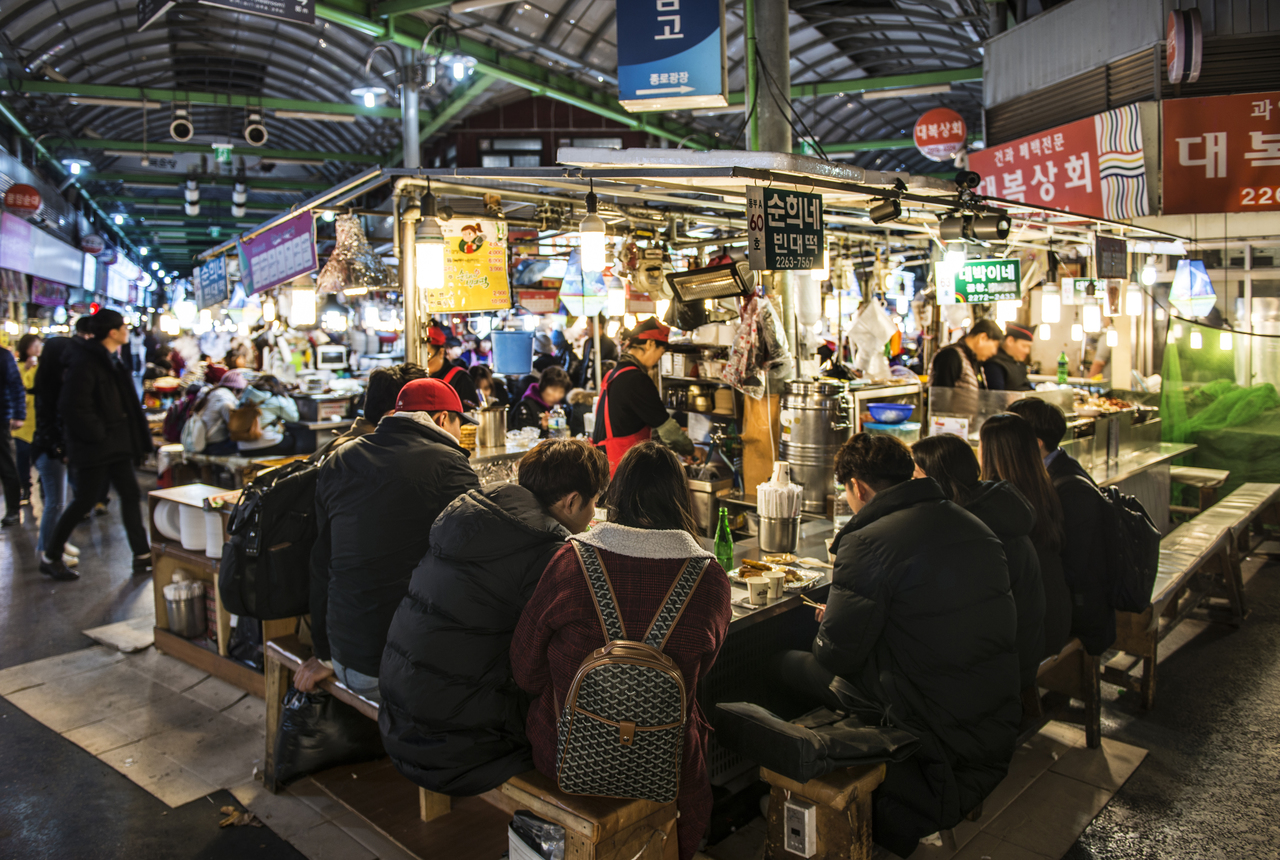
- Bindietteok (빈대떡 - Mung Bean Pancakes): Coarsely ground mung beans mixed with bean sprouts, scallions, and pork, fried crisp in shallow oil on flat iron griddles. Best enjoyed with pickled onion soy sauce and a bottle of chilled Makgeolli (Korean rice wine).
- Price: ~5,000 to 6,000 KRW ($3.75 - $4.50 USD) per disk.
- Mayak Gimbap (마약김밥 - Mini Addictive Seaweed Rolls): Bite-sized rice rolls filled with pickled radish and carrot, brushed with aromatic sesame oil and toasted sesame seeds. Served with spicy mustard dipping sauce.
- Price: ~3,000 to 4,000 KRW ($2.25 - $3.00 USD) per plate.
- Yukhoe (육회 - Beef Tartare & Live Octopus): Head into "Yukhoe Alley" inside the market for razor-thin raw beef seasoned with sesame oil, topped with raw egg yolk and sweet Korean pear slices. Adventurous eaters can try Yukhoe Tangtangi—raw beef paired with chopped live octopus (Sannakji).
- Price: ~19,000 to 32,000 KRW ($14.00 - $24.00 USD).
- Kal-guksu (칼국수 - Knife-Cut Noodles): Handmade wheat noodles sliced live at the stall bench and boiled in anchovy broth. Don’t miss the famous Netflix-featured noodle stall in the central intersection.
- Price: ~7,000 to 8,000 KRW ($5.25 - $6.00 USD).
Local Insider Tips for Gwangjang Market
- Operating Hours: Food stalls operate daily from 9:00 AM to 11:00 PM (peak atmosphere is between 6:00 PM and 9:30 PM). Vintage clothing arcades upstairs close around 7:00 PM.
- Payment & Cash Hacks: While brick-and-mortar shops and larger yukhoe restaurants accept international credit cards and Wowpass, most small central street food stalls strictly prefer physical cash (Korean Won). Keep 20,000 to 30,000 KRW in small bills handy.
- Subway Access: Take Subway Line 1 to Jongno 5-ga Station (종로5가역), Exit 8, and walk straight for 1 minute. Alternatively, take Line 2 or Line 5 to Euljiro 4-ga Station, Exit 4.
- Guided Experience: If you prefer avoiding long queue times or language barriers at busy stalls, book a curated Gwangjang Market Food Tour.
2. Euljiro Pocha Alley & Hipjiro (을지로 노가리 골목): Outdoor Street Beer & Retro Vibe
Located just a short 10-minute walk south of Gwangjang Market lies Euljiro, affectionately dubbed "Hipjiro" by Seoul’s Gen Z youth. By day, Euljiro is an industrial hardware printing district filled with small repair shops. By 6:30 PM, workers roll up their metal shutters, and hundreds of brightly colored plastic tables spill out into narrow concrete alleyways.
What is a Pocha (포장마차)?
A Pocha (short for Pojangmacha) is a classic Korean street tent or outdoor drinking spot serving simple tavern snacks (Anju) paired with ice-cold draft beer, Soju, or Somaek (Soju-beer cocktails).
Signature Highlights in Euljiro
- Nogari Alley (노가리 골목): Famous for serving dried young pollack (Nogari) grilled crisp over flames for just 2,000 to 3,000 KRW per fish, served with spicy mayonnaise dipping sauce.
- K-Style Fried Chicken & Golbaengi (골뱅이무침): Crispy garlic fried chicken paired with spicy sea snail salad tossed with scallions and chewy wheat noodles.
- Retro Rooftop Bars & Vinyl Lounges: Look closely at non-descript steel doors in building stairwells—behind them lie hidden craft beer taprooms and retro vinyl music bars like Climb As You Are and Eulji Daabang.
Euljiro Local Etiquette & Logistics
- Peak Hours: 7:00 PM to midnight (Thursday through Saturday nights are exceptionally busy).
- Payment: Unlike traditional market stalls, almost every outdoor pocha and tavern in Euljiro accepts Wowpass, Namane, Apple Pay (Visa/Mastercard), and international credit cards.
- Subway Access: Take Subway Line 2 or Line 3 to Euljiro 3-ga Station (을지로3가역), Exits 9, 10, or 11.
3. Banpo Romantic Moonlight Market (반포 한강 야시장): Riverside Food Trucks & Fountain Shows
If you want a modern, open-air night market experience right along the Hangang River, head to the Banpo Romantic Moonlight Market (part of the seasonal Hangang Moonlight Night Market series).
Held at Banpo Hangang Park, this market combines global food trucks, handmade artisan craft booths, live acoustic street music, and spectacular river skyline views.
Key Highlights at Banpo Night Market
- Global Food Trucks: Over 40 gourmet food trucks serving everything from Korean pork belly (Samgyeopsal) rice bowls and grilled steak skewers to Cuban sandwiches, churros, and fresh fruit lemonades.
- Banpo Bridge Rainbow Fountain (달빛무지개분수): The world’s longest bridge fountain shoots nearly 200 tons of water per minute synchronized to rainbow LED lights and background music. Fountain shows run every 20 minutes from 7:30 PM to 9:00 PM (April through October).
- Riverfront Picnic Setup: Rent a picnic mat or portable folding chairs near the park convenience stores, pick up fried chicken and food truck dishes, and enjoy a breezy picnic right by the water.
Seasonal Schedule & Access
- Operating Schedule: Operating on select weekend evenings (typically Friday and Saturday from 6:00 PM to 11:00 PM) during spring and autumn seasons. Always verify current weather conditions and Seoul Metropolitan Government announcements before heading out.
- Subway Access: Take Subway Line 3, 7, or 9 to Express Bus Terminal Station (고속터미널역), Exit 8-1, and walk approximately 15 minutes north toward Banpo Hangang Park.
4. Seoul Nightlife Quick Comparison Guide
(Photo: Source - Korea Tourism Organization, KOGL Type 1)
To help you decide which night market best fits your schedule and dining preferences, here is a quick overview comparison:
5. Practical Traveler Tips for Seoul Night Markets
- Carry Emergency Cash: While Seoul is over 95% cashless, traditional market stalls (especially small street carts in Gwangjang and Myeongdong) operate faster with exact cash. Keep 20,000 KRW in 1,000 and 5,000 KRW banknotes.
- Mind the Last Subway Train: Seoul Subway lines usually stop running between 11:30 PM and 12:00 AM (midnight). If you stay out past midnight, use the Kakao T app to call a taxi or look for Owl Night Buses (N-Buses) like the N15 or N30 lines.
- Seating Etiquette: At Gwangjang Market food counters, sit only if you plan to order food from that specific vendor. Sharing a single bench seat between multiple non-eating companions during peak hours is frowned upon.
- Trash Disposal: Public trash cans are rare in Seoul streets. Keep a small plastic bag in your daypack to hold skewers, paper cups, and napkins until you find a convenience store bin or return to your hotel.
Frequently Asked Questions (FAQ)
Q1. Is Gwangjang Market safe for solo female travelers at night?
Yes! Seoul is consistently ranked among the safest cities in the world. Traditional markets like Gwangjang are well-lit, crowded, and friendly for solo travelers of all genders late into the evening.
Q2. Can I use Wowpass or international credit cards at Gwangjang Market?
Large indoor restaurants and shops accept cards, but central street stalls inside the market prefer cash. It is recommended to bring cash or use an on-site Wowpass kiosk to convert currency into Korean Won.
Q3. What is the best time to visit Euljiro Pocha Alley?
Arrive around 6:30 PM to 7:00 PM on a Thursday or Friday evening. Tables fill up quickly by 7:30 PM, especially during pleasant spring and autumn weather.
This guide was researched and published locally in Seoul (July 2026). Plan your late-night food crawl today!

