Seoul Traditional Market Food Guide (2026): Gwangjang vs. Tongin vs. Mangwon Markets – Snacks, Coins & Local Hacks
As a local living in Seoul, people frequently ask me where to find the most authentic and soulful Korean food in the city. My answer is always immediate: skip the polished shopping mall food courts and head straight to Seoul’s traditional markets. These historic, covered alleyways are the living beating heart of Korean food culture. They are where grandmothers have spent decades flipping crispy mung bean pancakes, hand-rolling fresh gimbap, and simmering pots of spicy rice cakes over open flames.
However, navigating Seoul’s traditional markets as a first-time foreign visitor can feel overwhelming. Menu signs are often written exclusively in Korean, bench seating is cozy and communal, and payment methods range from digital transit cards to physical brass coins. Each market in Seoul possesses its own distinct personality, culinary focus, and operating rules.
To help you sample the absolute best street food without stress, I have put together this ultimate local guide comparing Seoul's top three traditional markets: Gwangjang Market, Tongin Market, and Mangwon Market. Whether you are craving sizzling comfort food, seeking a vintage gamified lunchbox experience, or looking to picnic like a Seoul hipster near the Hangang River, here is everything you need to know before you go.
Quick Comparison: Seoul’s Top 3 Traditional Markets
| Feature | Gwangjang Market (광장시장) | Tongin Market (통인시장) | Mangwon Market (망원시장) |
|---|---|---|---|
| Vibe & Atmosphere | Bustling, iconic food mecca with night-market energy | Historic hanok alleyway with vintage retro gaming charm | Hip, youth-centric neighborhood market near Hongdae |
| Signature Dishes | Bindaetteok, Mayak Gimbap, Hand-cut Kalguksu, Yukhoe | Gireum Tteokbokki (Oil Rice Cakes), Custom Coin Lunchbox | Dakgangjeong (Fried Chicken), Fried Chili Peppers, Croquettes |
| Unique Feature | 100+ year historic market with dense stall rows | Yeopjeon (Brass Coin) Dosirak Cafe lunchbox system | Easy takeout setup for picnic at nearby Mangwon Hangang Park |
| Best Time to Visit | 11:00 AM – 2:00 PM or 5:30 PM – 9:00 PM | 11:00 AM – 3:00 PM (Dosirak Cafe hours) | 1:00 PM – 7:00 PM |
| Nearest Subway | Jongno 5-ga Station (Line 1, Exit 7 or 8) | Gyeongbokgung Station (Line 3, Exit 2) | Mangwon Station (Line 6, Exit 2) |
1. Gwangjang Market (광장시장): The Iconic Street Food Mecca
Established in 1905, Gwangjang Market is Korea’s oldest continuously operating daily market. Located in the heart of Jongno, stepping inside Gwangjang feels like entering a sensory festival of sizzling oil, steaming pots, and lively chatter. It is the quintessential market featured on Netflix's Street Food: Asia, and for good reason.
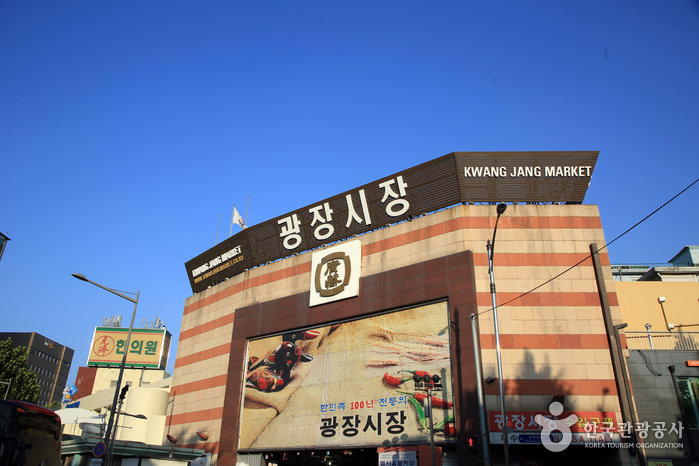
(Image Source: VisitKorea, KOGL Type 3)
Must-Try Street Food Specialties
- Bindaetteok (빈대떡 - Crispy Mung Bean Pancake)
Coarsely ground mung beans are mixed with kimchi, bean sprouts, and pork, then shallow-fried in large iron griddles until golden brown and super crunchy. Eat it hot dipped in soy sauce infused with raw onion slices. Pair it with a bowl of ice-cold Makgeolli (Korean rice wine) for the authentic local experience. - Mayak Gimbap (마약김밥 - "Addictive" Mini Gimbap)
Bite-sized rice rolls filled with pickled radish, carrots, and spinach, brushed with fragrant sesame oil and toasted sesame seeds. What makes them addictive is the tangy mustard dipping sauce served alongside. - Hand-Cut Kalguksu (칼국수 - Knife-Cut Noodle Soup)
Watch skilled grandmothers roll dough and slice fresh noodles by hand right before your eyes. Served in a rich anchovy and kelp broth topped with zucchini and seaweed, it is pure comfort in a bowl. - Yukhoe (육회 - Korean Beef Tartare)
If you feel adventurous, walk down Gwangjang’s dedicated Yukhoe Alley behind the main food rows. Freshly sliced raw beef tenderloin is dressed with sesame oil, garlic, and pine nuts, served over crunchy Asian pear slices and topped with a raw egg yolk.
When I visited Gwangjang Market with my visiting friends last month, we grabbed seats at a central Bindaetteok bench stall, ordered a fresh stack of mung bean pancakes, and shared stories with fellow travelers over fresh Makgeolli. The vibrant energy under the market's glass canopy is something you will remember long after your trip.
Practical Tips for Gwangjang Market
- Payment: Major food stalls now accept credit cards and mobile payments, but smaller fruit or snack stalls prefer cash. Carrying around 10,000 to 20,000 KRW in cash is highly recommended. You can also pick up a physical transit card like the Get Korea Transport Pass for effortless subway trips directly to Jongno 5-ga Station.
- Queueing Hack: The central food aisles get extremely crowded between 12:00 PM and 2:00 PM. Arrive around 10:30 AM for a relaxed late breakfast or come after 6:00 PM for dinner.
2. Tongin Market (통인시장): The Vintage Coin-Lunchbox Experience
Nestled just west of Gyeongbokgung Palace in the historic Seochon neighborhood, Tongin Market offers a charming contrast to Gwangjang. Originally created in 1941 during the Japanese colonial period for local residents, Tongin Market transformed itself into one of Seoul's most creative culinary destinations with its famous Yeopjeon Dosirak Cafe (엽전 도시락).

(Image Source: VisitKorea, KOGL Type 1)
How the Brass Coin Lunchbox System Works
Tongin Market allows you to play with history by converting modern Korean Won into traditional brass coins called Yeopjeon (엽전), which were used during the Joseon Dynasty.
- Buy Your Coin Bundle: Head to the Customer Service Center (Dosirak Cafe) on the second floor of the market building. Pay 5,000 KRW to receive a string of 10 brass coins along with an empty black lunchbox tray.
- Explore the Alleyway: Walk down the market corridor and look for participating vendors marked with a small wooden sign that reads "Dosirak Cafe Vendor" (도시락카페 가맹점).
- Trade Coins for Food: Exchange 1 to 3 coins per portion for various Korean dishes, including tteokbokki, mini gimbap, rolled omelets (Gyeran-mari), braised tofu, glass noodle stir-fry (Japchae), and pan-fried dumplings (Mandu).
- Enjoy Your Meal: Return to the second-floor cafe dining space, where you can purchase rice and soup for 1 extra coin or 1,000 KRW cash, sit down, and enjoy your customized feast.
Must-Try Dish: Gireum Tteokbokki (기름떡볶이 - Oil-Stirred Rice Cakes)
Unlike standard Korean rice cakes simmered in thick sweet sauce, Tongin's signature Gireum Tteokbokki is pan-fried in seasoned oil inside giant cast-iron skillets. It comes in two famous varieties: a savory chili-powder version (Spicy) and a mild soy-sauce version (Soy). The exterior is crispy and chewy, with a smoky, nutty flavor.
If you are staying near Seochon or Insadong, you can check accommodations nearby on Check Top Seoul Hotels on Agoda.
3. Mangwon Market (망원시장): The Modern Local Neighborhood Gem
Located in Mapo-gu just one subway stop away from the bustling student hub of Hongdae, Mangwon Market represents the modern evolution of Seoul's traditional markets. It is clean, covered, well-organized, and hugely popular among young Seoul residents and food enthusiasts.
Must-Try Specialties at Mangwon Market
- Dakgangjeong (닭강정 - Sweet & Spicy Boneless Fried Chicken)
Mangwon is famous for its specialized fried chicken stalls offering up to 6 different glaze flavors, including Sweet Spicy, Garlic Soy, Cheese Mustard, and Fruit Spicy. You can purchase convenient cup sizes (from 4,000 KRW) or full boxes to share. - Gochu-twigim (고추튀김 - Deep-Fried Stuffed Chili Peppers)
Huge green chili peppers are stuffed generously with seasoned minced pork and tofu, dipped in light batter, and fried twice until extra crispy. They are mild, juicy, and irresistible. - Handmade Bakery Croquettes (수제 고로케)
Classic retro bakeries sell freshly fried croquettes filled with kimchi, potato, curry, or red bean for as little as 1,500 KRW each. - Marshmallow Ice Cream & Seasonal Bungeoppang
Modern dessert stalls serve toasted marshmallow ice cream sticks and fish-shaped bungeoppang pastries filled with nutella, custard cream, or sweet red bean paste.
The Ultimate Local Picnic Hack
One of my favorite weekend routines in Seoul is heading to Mangwon Market in the late afternoon, picking up a box of Dakgangjeong and stuffed chili peppers, and walking 10 minutes down to Mangwon Hangang Park. You can sit by the riverbank, watch the sunset over the Han River, and enjoy your market feast. For more details on riverfront picnics, check our complete Seoul Hangang River Nightlife & Summer Night Picnic Guide.
Practical Survival Guide for Foreign Tourists
1. Money & Digital Payments
While major credit cards are widely accepted at established market shops, small street vendors often operate on cash or local bank transfers.
- Always carry 15,000 to 30,000 KRW in crisp cash.
- Ensure your smartphone has data connectivity using an Reserve Korea Unlimited eSIM/SIM so you can easily translate menus using Naver Papago or Google Lens.
2. Waste Disposal & Market Etiquette
- Where to throw trash: Traditional markets in Seoul rarely have public trash cans along the aisles. After eating your skewers or food cups, return the wooden sticks and paper cups to the vendor where you bought them—they will gladly dispose of them for you.
- Seating: Bench seating at food stalls is communal. Move inward to allow room for others to sit down during busy meal times.
3. Essential Korean Phrases for Market Ordering
- "Igeo juseyo" (이거 주세요) – "Please give me this one" (Point to the dish).
- "Eolmayeyo?" (얼마예요?) – "How much is this?"
- "Kaku-geolje-do dwaeyo?" (카드 결제 돼요?) – "Do you accept credit cards?"
- "Kamsahamnida" (감사합니다) – "Thank you!"
Frequently Asked Questions (FAQ)
Are Seoul traditional markets safe and hygienic for foreign travelers?
Yes! Traditional markets in Seoul are extremely safe, clean, and regulated by municipal health authorities. Food stalls cook dishes fresh right in front of you at high temperatures. High foot traffic ensures rapid ingredient turnover, so seafood, meats, and vegetables remain fresh throughout the day.
Can I pay with credit cards or T-Money at market stalls?
At Gwangjang and Mangwon Markets, permanent food shops and larger stalls accept international credit cards (Visa, Mastercard) and T-Money cards. However, smaller open-air bench vendors and temporary fruit stands may only accept cash. At Tongin Market, you purchase your lunchbox coins with cash or credit card at the central customer center.
Which market should I choose if I only have time for one?
If you want the most iconic, high-energy street food experience with maximum dish variety, choose Gwangjang Market. If you are traveling with kids or want a fun interactive lunch experience near historic palaces, choose Tongin Market. If you want a modern, relaxed neighborhood vibe near Hongdae with easy picnic options, choose Mangwon Market.


